

IQ Test AI, AI-personalized IQ tests with verifiable certificates
Smart IQ-testing app that adapts to the user and issues verifiable certificates on completion.
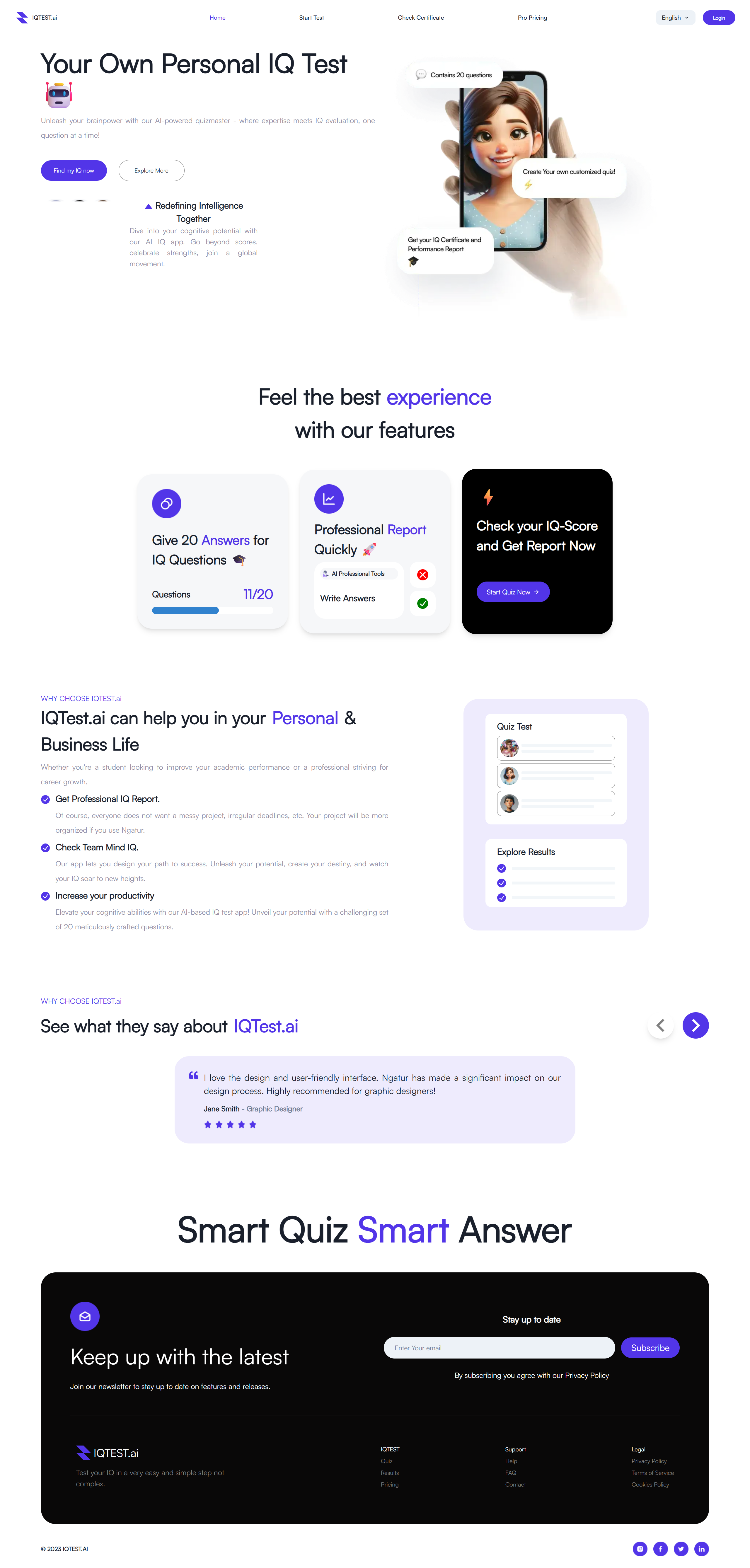
Project Overview
IQ Test AI is an assessment app that generates personalized IQ tests for professionals and issues a verifiable certificate at the end. The product replaces static question sets with an adaptive engine and turns the result into a shareable credential rather than a screenshot.
Client Background
The client operates in the EdTech space and serves professionals who use cognitive assessments for interview preparation, self-assessment, and role-based hiring. They needed a product that felt credible to both individual test takers and to recruiters who might receive the certificate. The brand and operator are confidential.
The Problem
Off-the-shelf IQ tests have two structural issues. Every taker sees the same fixed question set, so scores drift toward whoever has seen the questions before, and the result at the end is usually a screenshot with no way to confirm it is real.
That matters because the people taking these tests are using the result for something. They share it with a recruiter, attach it to a profile, or use it to benchmark themselves over time. A static score and an unverifiable image do not hold up to scrutiny.
Challenges
- Building an adaptive engine that adjusts difficulty without making the test feel inconsistent or unfair.
- Designing a certificate that can be verified by a third party without forcing them to create an account.
- Producing analytics that go beyond a single number while staying readable to a non-specialist.
- Keeping the test session reliable so a user does not lose progress mid-assessment.
- Presenting cognitive results in a way that feels grounded, not gamified.
Our Approach
We started by separating the product into three concerns: question selection, scoring and analytics, and credential issuance. Each was designed so it could evolve on its own without breaking the others.
The adaptive engine tracks running performance and adjusts the next question rather than picking from a fixed sequence. Scoring produces both an overall result and a breakdown across cognitive areas. Certificates are issued in a verifiable form so a recruiter or peer can confirm them without trusting a screenshot.
What We Built
User Experience
A focused test flow with one question on screen at a time, clear progress signals, and an end-of-test report that shows strengths and gaps rather than only a number.
Assessment Engine
An AI driven engine that picks the next question based on the user's running performance, so the difficulty curve fits the individual rather than the average taker.
Analytics and Reporting
A cognitive profile view with charts that surface category-level strengths and weaker areas, plus an overall score.
Credentialing
Verifiable certificates issued at the end of a completed test, designed to be shared and validated by a third party rather than presented as an image.
Technical Architecture
The system is split into a web app, an application API, an adaptive question engine, a scoring and analytics service, and a certificate issuer. The web app talks to the API for every action, the API delegates question selection to the adaptive engine, and certificates are issued through a dedicated service so verification can be hosted at a public URL.
Key Decisions
- Adaptive selection over fixed sets. We chose to adjust difficulty per user so repeat takers and shared question leaks lose their advantage. The tradeoff is more complexity in the engine and in score normalization.
- Verifiable certificate over PDF or image. A verifiable artifact takes more engineering than a static download, but it is the only version a recruiter can actually trust.
- Cognitive profile over single score. Surfacing category breakdowns gives users more value, at the cost of a busier results page.
- Web-first delivery. We focused on a clean web experience before any native app work so the product could ship and iterate quickly.
Results
- Test takers receive a defensible credential at the end, not a screenshot.
- The adaptive flow makes the test feel matched to the individual rather than a generic quiz.
- Results give users a cognitive profile they can act on, not just a number.
- The architecture supports adding new test types and analytics without reworking the core.
Project Highlights
- AI driven personalized question selection based on running performance.
- Verifiable certificates issued on completion.
- Cognitive strength analytics with charts, not only a single score.
- Architecture split into adaptive engine, scoring, and certificate issuance so each can evolve independently.
- Web product built for professionals using results for interview prep, self-assessment, or hiring contexts.
Screens and User Flows
The core flow starts when a user begins a test, runs through adapted questions, and ends with a scored cognitive profile and an issued certificate that can be verified by a third party.
Future Growth Opportunities
- Role-based assessments tuned to specific job families, built on the same adaptive engine.
- Employer side dashboards for teams that want to issue or verify tests at scale.
- Additional cognitive dimensions added to the analytics view without changing the test flow.
- Native mobile delivery of the same assessment for users who prefer testing on a phone.
- Public verification pages for certificates that recruiters can open without creating an account.
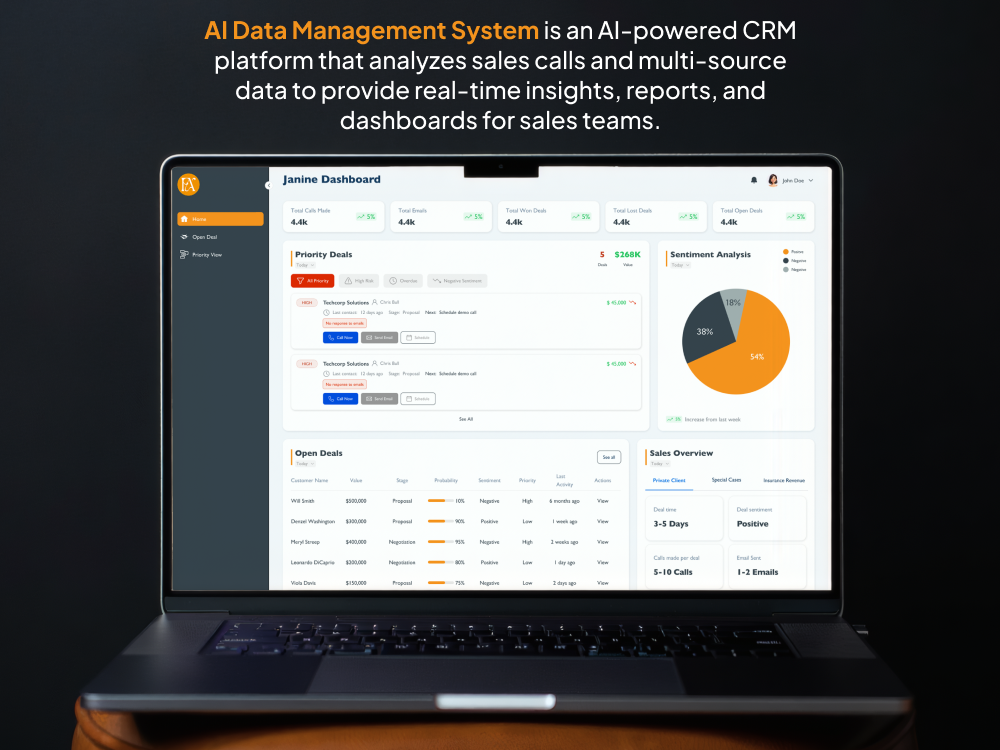

Want one of these for your team?
45-min call, fixed quote in 72 hours, code in production by week 4.
Core MVP shipped to production by week 4.
or send a 2-min Loom →or email hello@obsidiancode.io